
# Hamster Cage Guide: Comparison of Different Cage Types
>
> Note: SS = hamster. Proper care standards: adequate space, good ventilation, priority to hamster’s sense of security.
## 1. Acrylic Cage
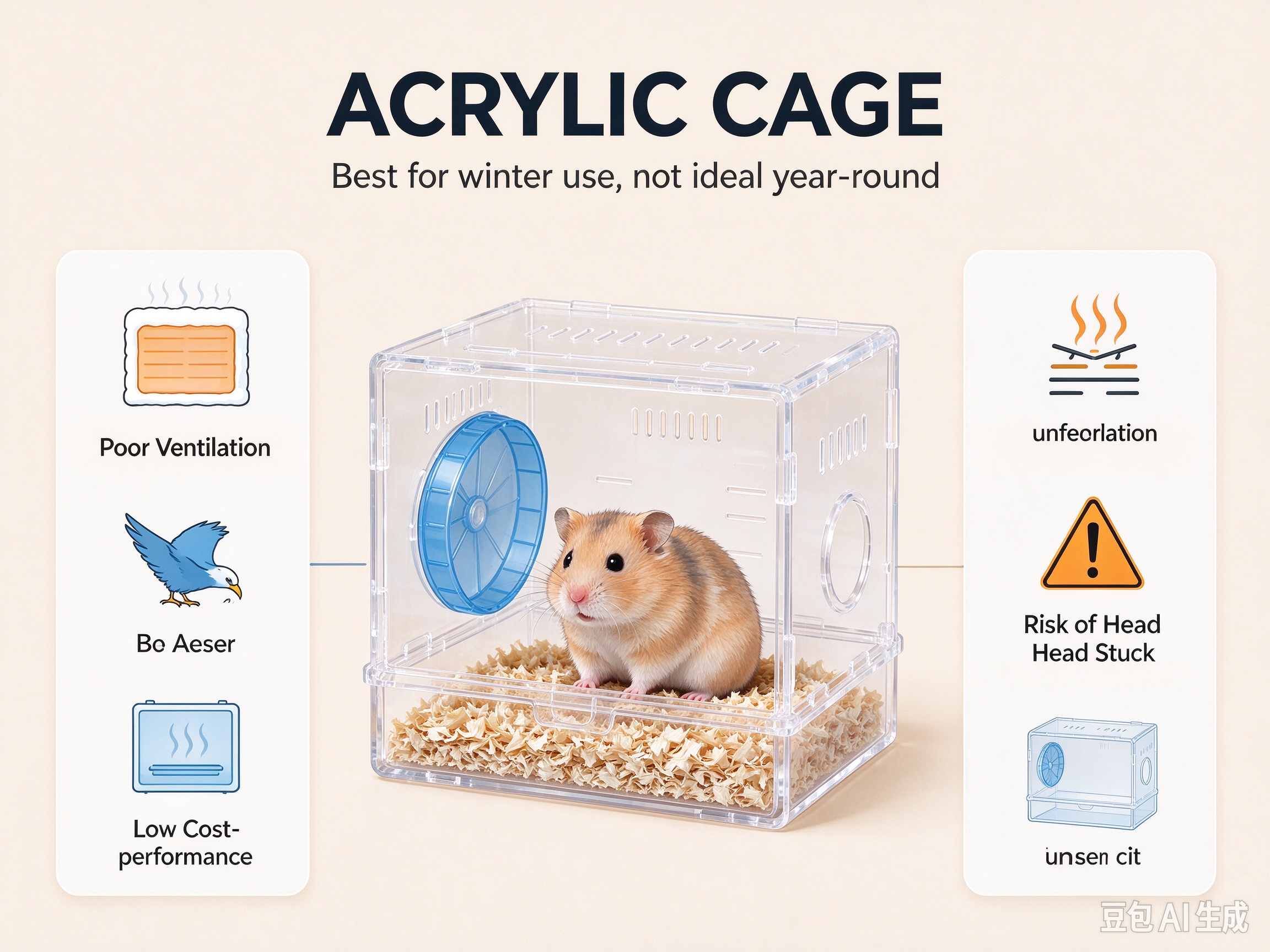
**Material**: Acrylic
**Ventilation**: Poor
**Cost-performance**: Low
✅ Pros
1. Well-sealed, great heat retention in winter.
2. Hard shell keeps out predators such as rats and weasels.
3. Fully transparent walls for easy observation of your hamster.
❌ Cons
1. Poor air circulation causes odors to build up inside; frequent cleaning is required.
2. Tends to overheat in all seasons except winter, as ventilation openings are small.
3. There have been fatal cases where hamsters got their heads stuck in the vents.
4. Constant exposure in a fully transparent enclosure stresses hamsters and reduces their sense of security.
5. Most pre-made acrylic cages fail to meet proper care space requirements. Custom large acrylic cages are expensive.
6. Hamsters with strong teeth may chew through acrylic panels.
7. Small access doors make handling and interacting with your hamster difficult.
📌 Verdict: Only suitable for short-term use in winter. Not recommended as a permanent home.
---
## 2. Modified PP Plastic Storage Bin
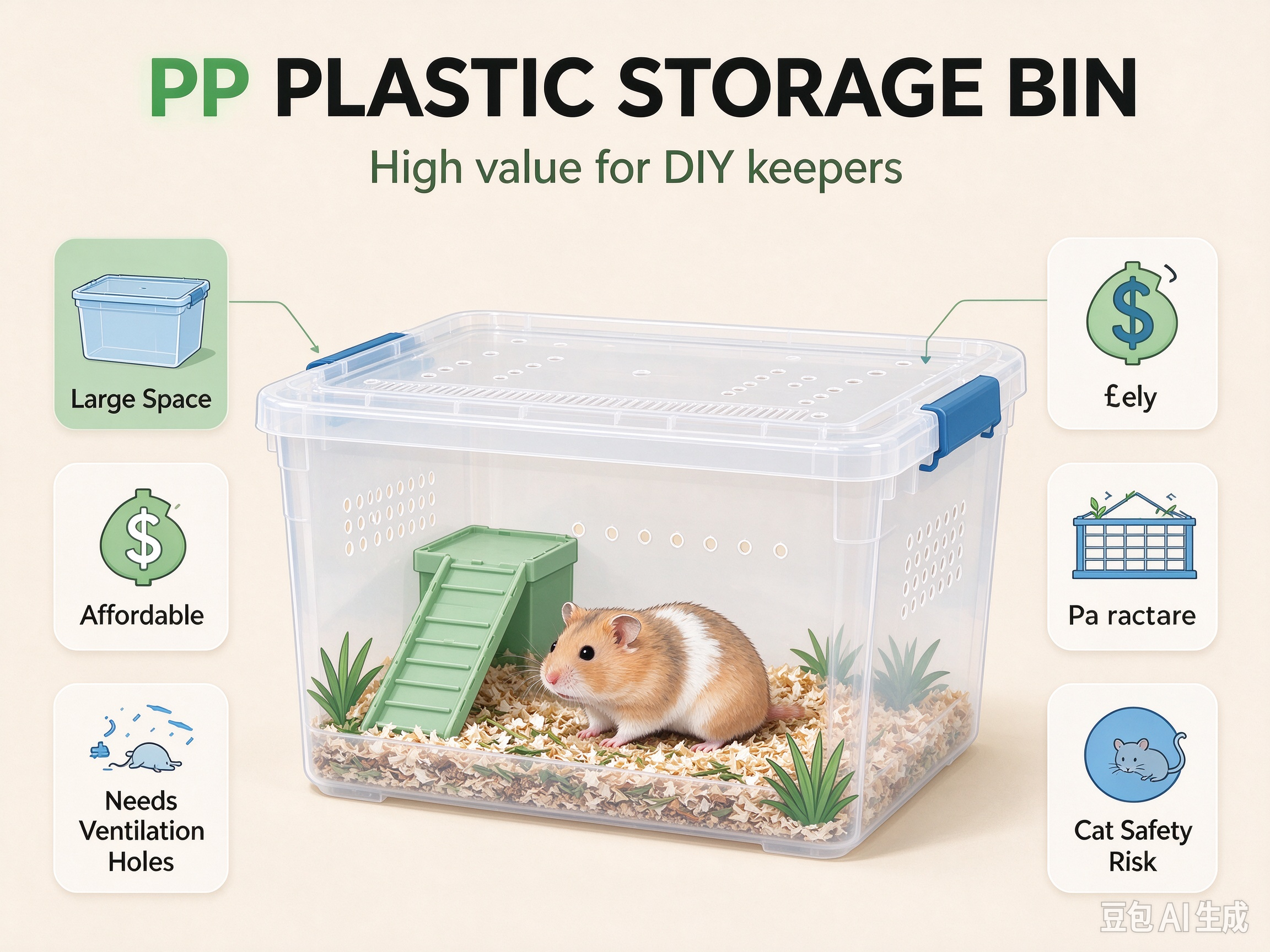
**Material**: PP Plastic
**Ventilation**: Average out of the box; good after modification
**Cost-performance**: High
✅ Pros
1. Affordable. A 250L storage bin offers far more space than a standard 60cm wire cage.
2. After drilling ventilation holes, it works well year-round and outperforms many wire cages.
3. Dorm-friendly: can be disguised as a storage box during room inspections.
4. Tall bin walls prevent escapes even without a lid (short bins excluded).
5. Smooth surfaces make it very hard for hamsters to chew through the bin.
6. Blocks small rodents like wild rats from getting inside.
❌ Cons
1. Poor ventilation if no holes are drilled.
2. Cats can easily knock the bin over, posing a safety risk.
3. No built-in mesh, so most hanging toys cannot be mounted.
📌 Verdict: Great choice for DIY keepers. Suitable for beginners and experienced owners alike, excellent value for money.
---
## 3. Wooden Drawer Cage (Originally for Chinchillas, sometimes repurposed for hamsters)
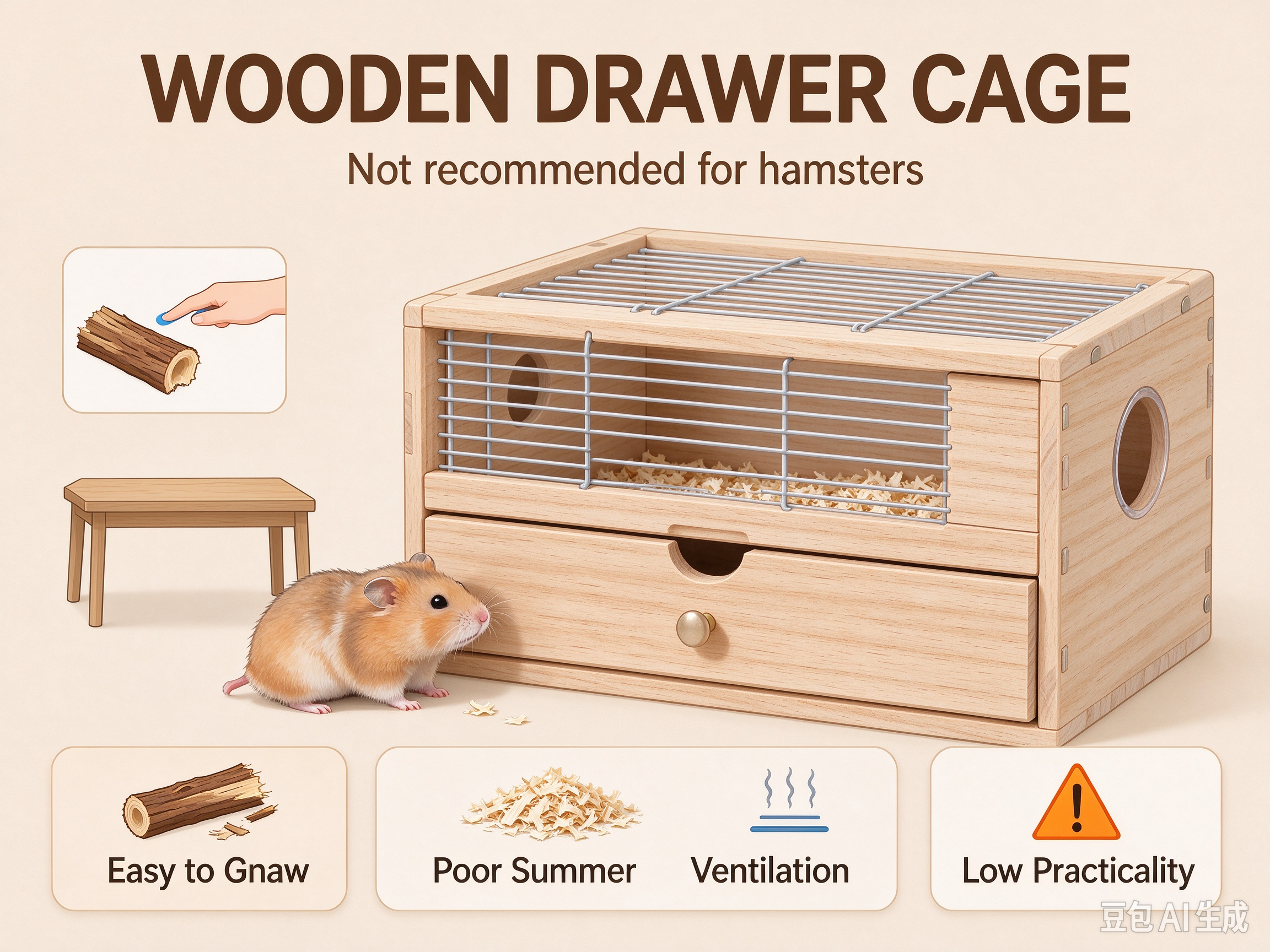
**Material**: Various solid or composite woods
**Ventilation**: Average
**Cost-performance**: Average
✅ Pros
1. Drawer design makes hamster handling convenient, ideal for desk placement.
❌ Cons
1. Hamsters will constantly gnaw the wood for teeth trimming, causing rapid wear and wood debris.
2. Traps heat easily and gets very hot in summer.
3. Designed for chinchillas; repurposing for hamsters is an uncommon practice.
📌 Verdict: Not recommended for hamsters. Low practicality.
---
## 4. Glass Tank / Reptile Tank (Fish tank, sloped-top tank)
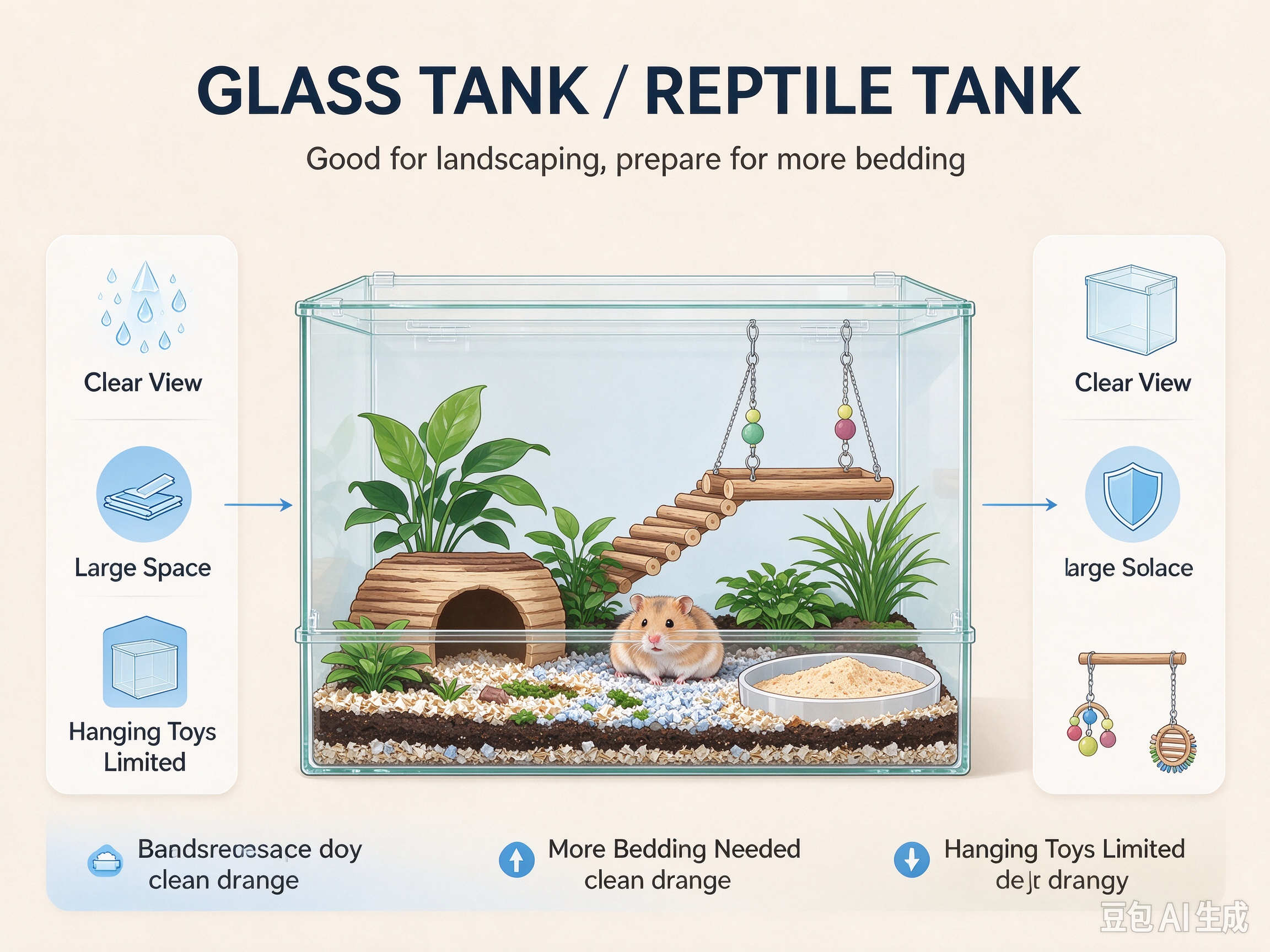
**Material**: Glass
**Ventilation**: Average
**Cost-performance**: High
✅ Pros
1. Clear glass for beautiful habitat landscaping.
2. You can get nearly 1-meter-long tanks at a reasonable price, providing plenty of space.
3. Less transparent surface area compared to full acrylic cages, so hamsters feel safer.
❌ Cons
1. Large tanks may still be unaffordable for student keepers.
2. Large volume means heavy bedding consumption and difficult cleaning. A big fish tank usually needs 2–3 packs of tofu litter.
3. No mesh frame, so hanging toys cannot be attached.
📌 Verdict: A good option if you have enough budget and love tank landscaping. Ensure proper ventilation and prepare for higher bedding costs.
>
> Note: SS = hamster. Proper care standards: adequate space, good ventilation, priority to hamster’s sense of security.
## 1. Acrylic Cage
**Material**: Acrylic
**Ventilation**: Poor
**Cost-performance**: Low
✅ Pros
1. Well-sealed, great heat retention in winter.
2. Hard shell keeps out predators such as rats and weasels.
3. Fully transparent walls for easy observation of your hamster.
❌ Cons
1. Poor air circulation causes odors to build up inside; frequent cleaning is required.
2. Tends to overheat in all seasons except winter, as ventilation openings are small.
3. There have been fatal cases where hamsters got their heads stuck in the vents.
4. Constant exposure in a fully transparent enclosure stresses hamsters and reduces their sense of security.
5. Most pre-made acrylic cages fail to meet proper care space requirements. Custom large acrylic cages are expensive.
6. Hamsters with strong teeth may chew through acrylic panels.
7. Small access doors make handling and interacting with your hamster difficult.
📌 Verdict: Only suitable for short-term use in winter. Not recommended as a permanent home.
---
## 2. Modified PP Plastic Storage Bin
**Material**: PP Plastic
**Ventilation**: Average out of the box; good after modification
**Cost-performance**: High
✅ Pros
1. Affordable. A 250L storage bin offers far more space than a standard 60cm wire cage.
2. After drilling ventilation holes, it works well year-round and outperforms many wire cages.
3. Dorm-friendly: can be disguised as a storage box during room inspections.
4. Tall bin walls prevent escapes even without a lid (short bins excluded).
5. Smooth surfaces make it very hard for hamsters to chew through the bin.
6. Blocks small rodents like wild rats from getting inside.
❌ Cons
1. Poor ventilation if no holes are drilled.
2. Cats can easily knock the bin over, posing a safety risk.
3. No built-in mesh, so most hanging toys cannot be mounted.
📌 Verdict: Great choice for DIY keepers. Suitable for beginners and experienced owners alike, excellent value for money.
---
## 3. Wooden Drawer Cage (Originally for Chinchillas, sometimes repurposed for hamsters)
**Material**: Various solid or composite woods
**Ventilation**: Average
**Cost-performance**: Average
✅ Pros
1. Drawer design makes hamster handling convenient, ideal for desk placement.
❌ Cons
1. Hamsters will constantly gnaw the wood for teeth trimming, causing rapid wear and wood debris.
2. Traps heat easily and gets very hot in summer.
3. Designed for chinchillas; repurposing for hamsters is an uncommon practice.
📌 Verdict: Not recommended for hamsters. Low practicality.
---
## 4. Glass Tank / Reptile Tank (Fish tank, sloped-top tank)
**Material**: Glass
**Ventilation**: Average
**Cost-performance**: High
✅ Pros
1. Clear glass for beautiful habitat landscaping.
2. You can get nearly 1-meter-long tanks at a reasonable price, providing plenty of space.
3. Less transparent surface area compared to full acrylic cages, so hamsters feel safer.
❌ Cons
1. Large tanks may still be unaffordable for student keepers.
2. Large volume means heavy bedding consumption and difficult cleaning. A big fish tank usually needs 2–3 packs of tofu litter.
3. No mesh frame, so hanging toys cannot be attached.
📌 Verdict: A good option if you have enough budget and love tank landscaping. Ensure proper ventilation and prepare for higher bedding costs.
 Treats & Supplies
https://hamstertribe.com/post/w5XX0s8e