Wheel size guide after trying four of them (with photos)
I have now owned four wheels. Here is what I would tell my past self.
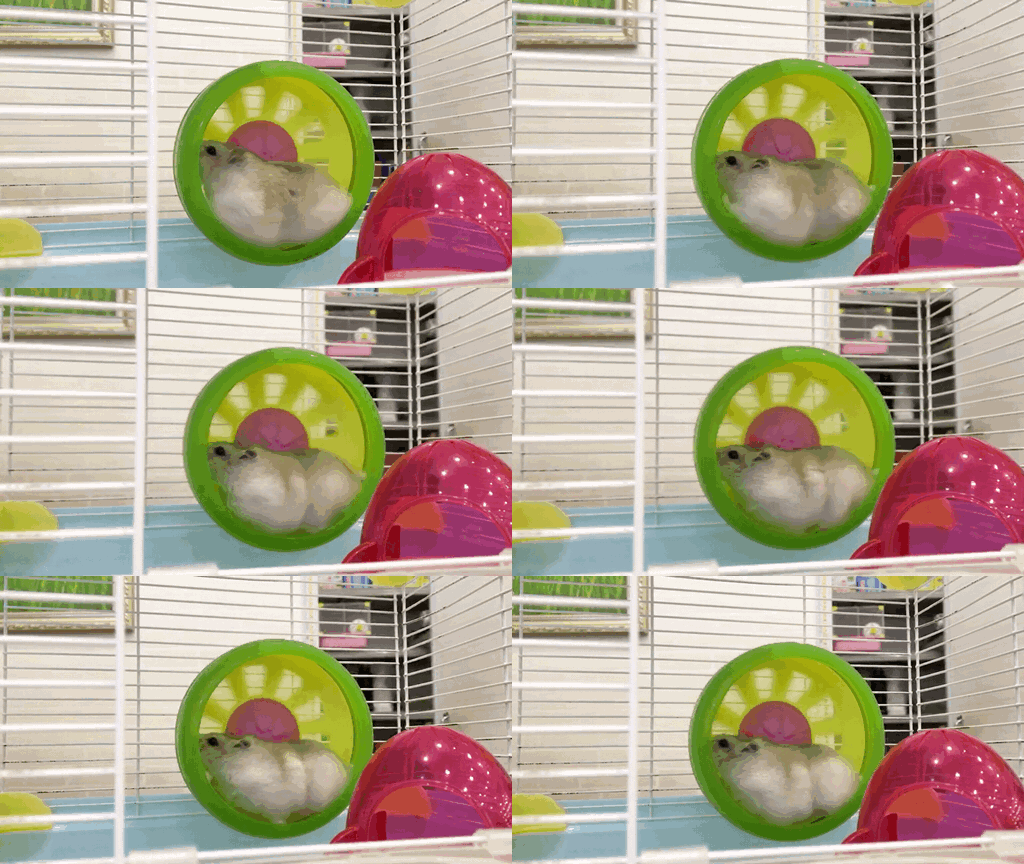
The single rule that matters: they have to run with a flat back. If the spine curves while running, the wheel is too small, no matter what the shop label says. For a dwarf that means 20cm minimum, and honestly 22-25cm is better. For a Syrian, 28-30cm. I know how big that looks in a cage. Get it anyway, or give up the floor space somewhere else.
What I tried, in order:
1. The 14cm wheel that came with the cage. He could use it, sort of, hunched over. Replaced it after about two weeks once I watched him properly at night.
2. A 17cm wooden wheel. Better, still too small, and the wood absorbed everything. It also got noisy as it wore in.
3. A 21cm plastic wheel with a stand. This was the first one he ran in properly, for long stretches, without the hunched back. The stand was the weak point, he tipped it over constantly.
4. A 28cm wheel attached to the bars. This is the one that stayed. He runs in it for what feels like hours and it does not move.
Other things that mattered as much as the diameter:
- Solid running surface. Bars or mesh with gaps catch toes and are genuinely dangerous. If you can push a pencil through the gaps, do not use it for a wheel.
- Silent is worth paying for. A cheap wheel squeaks at 2am and it is the reason a lot of people start resenting their hamster.
- Bearings go. Any wheel gets louder over months. A drop of safe oil on the axle brings it back.
- Mount it so the opening faces a wall or a hide. They feel exposed in an open wheel and will use it much less.
If you only fix one thing this month, make it the wheel. A wheel that is too small is the most common thing I see in photos, and it is the cheapest mistake to fix.
The single rule that matters: they have to run with a flat back. If the spine curves while running, the wheel is too small, no matter what the shop label says. For a dwarf that means 20cm minimum, and honestly 22-25cm is better. For a Syrian, 28-30cm. I know how big that looks in a cage. Get it anyway, or give up the floor space somewhere else.
What I tried, in order:
1. The 14cm wheel that came with the cage. He could use it, sort of, hunched over. Replaced it after about two weeks once I watched him properly at night.
2. A 17cm wooden wheel. Better, still too small, and the wood absorbed everything. It also got noisy as it wore in.
3. A 21cm plastic wheel with a stand. This was the first one he ran in properly, for long stretches, without the hunched back. The stand was the weak point, he tipped it over constantly.
4. A 28cm wheel attached to the bars. This is the one that stayed. He runs in it for what feels like hours and it does not move.
Other things that mattered as much as the diameter:
- Solid running surface. Bars or mesh with gaps catch toes and are genuinely dangerous. If you can push a pencil through the gaps, do not use it for a wheel.
- Silent is worth paying for. A cheap wheel squeaks at 2am and it is the reason a lot of people start resenting their hamster.
- Bearings go. Any wheel gets louder over months. A drop of safe oil on the axle brings it back.
- Mount it so the opening faces a wall or a hide. They feel exposed in an open wheel and will use it much less.
If you only fix one thing this month, make it the wheel. A wheel that is too small is the most common thing I see in photos, and it is the cheapest mistake to fix.

 Cage Setup & Decor
https://hamstertribe.com/post/wPEE8S7a